Posts

Showing posts with the label LI HAOCHANG

Project 4:What I did for the H&M ad incident

What I did for the H&M ad incident Find and read the ad: I found an H&M ad that was criticized for showing two young girls in school uniforms, with the headline "Keep those eyes on H&M's back-to-school fashion". Understand the background of the incident: The ad was criticized because it suggested that school-age girls should attract attention through their appearance, which many people believed was "sexualizing children". Analyze the impact of the ad: Impact on young girls: This ad may make young girls feel that their appearance is important, thereby ignoring their own abilities and character, which will have a negative impact on their self-esteem and self-identity. Impact on young boys: The ad may make young boys feel that girls can be judged based on their appearance, and such thoughts may lead them to form gender bias. Impact on older men: The ad may make older men feel that it is normal to sexualize young girls, which may encourage inappropriate ...
W13.2 May 31(Fri) extra credit

 Method: During the days of trying to live without technology, I kept a handwritten diary to record my daily life and feelings. Every night, I would spend a few minutes writing down my experiences and observations of the day, recording them simply and clearly on paper. Description: During this time, I found that there are some technologies that I can live without, such as computers, smartphones, microwave ovens, etc. I learned to use library books to obtain information and use paper and pen to complete some things and knowledge. However, there are some technologies that I find it difficult to live without, such as modern transportation, medical technology, electricity and water supply systems. These technologies have a great impact on the quality and safety of my life. Analysis: Our lives are very different from those in the 19th century. People in the 19th century did not have electricity, modern medical technology and transportation. They relied on manual labor and simple living ...

W10.2 May 10 (Fri) extra credit 2

Image
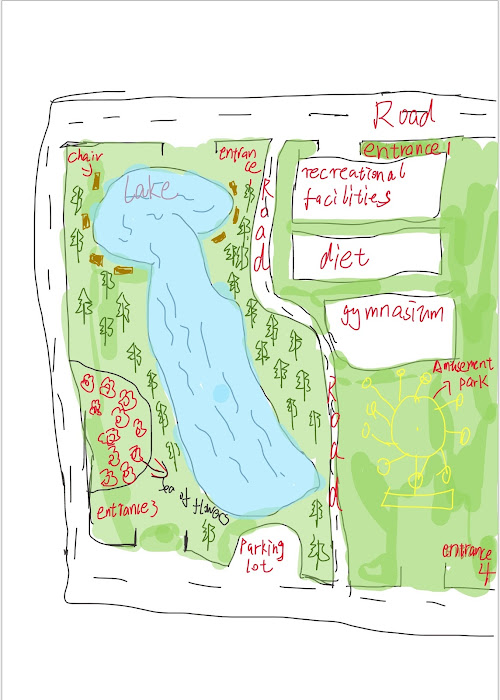
1. Visibility and accessibility Whyte’s perspective: Whyte emphasizes that the success of public spaces relies heavily on their visibility and accessibility. An obvious entrance and clear path are crucial. Map analysis: In this map, the main entrance is clearly marked and the path is intuitive, helping visitors to easily enter and navigate the park. 2. Gathering and activity areas Whyte's take: People tend to stay and move where they can see other people, he points out. Therefore, the design should encourage gathering areas with high visibility. Map analysis: The map has simple but prominent icons for rest areas and playgrounds, which are key areas that promote social interaction. 3. Simplicity and usability Whyte’s point of view: Whyte believes that the design of public spaces should be simple and intuitive, and its purpose can be understood without additional instructions. Map Analysis: The simple design of the map is consistent with this theory, avoiding too many complex element...

W10.2 May 10 (Fri) extra credit 1

what did I do? I conducted observations at various locations in the park, including picnic areas, jogging trails, and green spaces. I recorded people's activities, how they interacted, and their behavioral characteristics in the park. At the same time, I noticed the characteristics of different age groups, different family structures, and different activity groups. What did I learn? Through observation and incorporating White's theory, I found that the design of public spaces has a significant impact on people's behavior. White proposed that public spaces need to have attractive features such as seating, greenery and easy access. In my observations, I found a similar phenomenon: The importance of seating and seating areas: White emphasizes the role of seating. I observed that the benches and picnic tables attracted people to gather, rest, and socialize. Natural environment and use of space: White mentioned the importance of greenery and open space. I observed that the grass...

lihaochang

Image
 I think the design of our school is relatively good. According to White's "green space and open areas" theory. There are still these places in schools. Although the coverage of green space is relatively small. But it still provides us with such space.For example, our professional building has a design space. But apart from the smoking area you can sit and relax. Elsewhere it was standing room only. I think it would be appropriate to install some chairs. On the left side of our courtyard building. As far as I know the place on the left has been recently developed.Like the picture below. second. According to White's theory of "effective use of urban space". I think this aspect of the school is poorly designed. There are many places in the school that are deserted. Not very well designed. And the space utilization is not good. For example, in front of the basketball court. Today it is all covered with dirt. But there are a few chairs. But the environment is no...

nice street

Image
 The streets I build are an idealization. I hope the center of the city is a park. The lawn then spreads all around. And no matter where you are in the city, you can come to the park to rest. The vegetation coverage is very high. And there are many entertainment facilities in the city. The transportation method is also very convenient. There's no way to show it well in this picture. Because good pictures require money. In White's theory. I referenced diversity and mixed use. All the amenities of life are available in this street. And I also refer to connectivity in theory. City and city. Cities and parks can be better connected. And I also added hybrid buildings. There are new and old buildings, which can be chosen according to people's economy.

W9.1 April 29 (Mon) extra credit

 In White's book "Social Life in Small Urban Spaces", I read Chapter 8 of Interior Space. After reading White's "Social Life in Small Urban Spaces", I found this book to be really interesting and at the same time quite in-depth. This book is like an enthusiastic tour guide, taking me through every corner of the city, allowing me to re-understand those small spaces that I might normally ignore. The author White uses very plain and vivid language to describe the daily life scenes he observed in streets, parks, cafes and other places. He tells how people meet, communicate and spend their time in these places. Through these descriptions, I seemed to be there, feeling the breath of life and human touch in those small spaces. Although the book touches on some sociological theory, White explains it in a very accessible way. I think as long as you read patiently and think carefully, you can understand his point of view. I think this book is a very good reference boo...

My ideal park design

Image
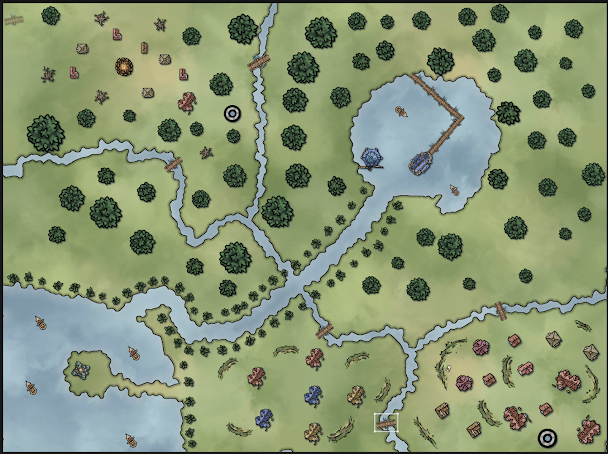
There are many facilities in this park. First of all, there are two lakes in the map. Boating is available on both lakes. You can also rest by the lake and on the grass. The lake in the lower left corner of the map can be played in the middle of the lake. You can also stay in a hotel in the middle of the lake. At the lake in the upper right corner of the map, you can rest and enjoy the scenery in the pavilion. And you can enjoy the scenery from the buildings in the middle of the lake. There are also restaurants and entertainment facilities in the building. There are bonfires and fountains in the upper left corner of the map where people can camp and party. Of course there are many cultural facilities here. Below the map is the amusement park. There are various entertainment options. And there is a gymnasium. There are bowling, badminton and other facilities inside. There is also a golf course outside the stadium grounds. The plants throughout the park are also very rich. Can relax on t...

W6.1 April 8 (Mon)《Pleasantville》

 Front Stage: In the fictional world of Happy Valley, people display front stage behavior in public settings. They try to put their best foot forward and seek joy and relaxation. This kind of performance behavior includes their speech, behavior, dress, social etiquette, etc., all to meet the expectations and requirements of others in order to gain recognition and praise from others. Backstage behavior: Corresponding to the front stage performance, when the residents of Happy Valley return to real life, they may show backstage behavior that is completely different from that on the front stage. Backstage, they may be more spontaneous, letting their guard down and showing their true selves. This switching between front and back shows how people adjust their behavior in different situations. Impression management: In Happy Valley, people also perform impression management in different ways. They may attract the attention of others and create a positive image through humorous speech and...

W6.1 April 8 (Mon)《The Sting》

 Switching between frontstage and backstage: Goffman's concepts of frontstage and backstage are well reflected in "The Liar". When the protagonists carry out fraudulent activities, they present to the audience a carefully planned and confident "front desk" image. They must demonstrate superb acting and lying skills to deceive the target person. However, behind the scenes of the scam, they may return to a relatively private "backstage" area to relax their vigilance, discuss strategies, and even prepare for the next performance. This switching between front and backstage demonstrates how they maintain the continuity of the scam through different performances in social interactions. Impression Management: In order to pull off a successful scam, the protagonists must engage in careful impression management. They create a convincing "front" image through carefully crafted words, clothing, mannerisms, and even backstories to win the target's tr...

W5.1 April 1 (Mon)

 Character performance and presentation: In the movie, the protagonist Rick (Rick Blaine) and other characters show different character characteristics on the stage of Casablanca. Rick is initially portrayed as a cynical, selfish nightclub owner, but as the story develops, the audience sees the deep affection and sacrifice behind him. Related to Goffman's theory: This shows how people perform specific roles in specific social situations and use these performances to convey the image they want to project. Switching between frontstage and backstage: In the movie, Rick's nightclub and private conversation with Ilsa Lund are typical switches between frontstage and backstage. In the nightclub, Rick displays his sophistication and aloofness; while in his conversation with Ilsa, the audience sees his true, vulnerable emotions. Related to Goffman's theory: This reflects how people switch between the foreground and the backstage in their daily lives, and how these switches affect th...

Classroom Questions

 1.Is giving a gift to a teacher a bribe? I don't think giving gifts to teachers is an act of bribing teachers and getting good grades. First of all, sending things to teachers in China will not cause the above problems. This is a sign of affection for the teacher. Of course, what we usually send is not that expensive. I think this is also a sign that I hope teachers can pay more attention to it. Maintain a harmonious class atmosphere with teachers. 2.Can we identify any element of drama in what has happened around us in the past 24 hours? Yesterday at dinner. After we ordered in a restaurant. I waited for more than an hour and didn't serve. We are in a hurry. Show an anxious expression, and I am angry and make an angry expression. And asked why he had waited so long. The waiter also made some moves nervously. But the waiter seems to be a lovely person. Explain that the machine is broken. I was very angry at that time. But I am a student and a quality person. I didn't make ...

Goffman elements in Casablanca

 Social interaction: The characters in the film engage in various social interactions in public places such as bars and streets, which embodies Goffman's theory of social interaction and interpersonal relationships. Character Acting: Characters are often required to perform, hiding their true emotions and motivations in order to preserve face or achieve personal goals. For example, Rick presents a cold and independent appearance in front of everyone, but he has deep emotions on the inside. Frontstage and backstage: In the film, there is a distinction between public places and private places. The former are usually public places such as bars, while the latter are private conference rooms or private residences. This embodies Goffman's concept of frontstage and backstage, that is, people display different behaviors and attitudes in different situations. Face: Characters often need to maintain their own face and maintain social image and status in public, which is consistent with G...

W4.1 March 25 (Mon) extra credit、2

I read Chapter 3 of Regions and Regional Behavior in Goffman's "The Presentation of Self in Everyday Life". This is a very interesting and insightful book. Through dramatic analogy, the author analyzes in a simple and easy-to-understand way how people present themselves, how they interact with others, and how they influence others' impressions of themselves through these interactions. Goffman's method of analysis makes complex social interactions vivid and easy to understand. As for the difficulty, I think the language of this book is relatively approachable and the examples are vivid, so it does not make people find it particularly difficult to read. However, since this book involves theories and concepts from multiple disciplines such as sociology, psychology, and anthropology, it may take some time for a beginner like me to digest and understand it. I think this book is a very good read for social science students in the 2020s. It can help us better understand ...

W4.1 March 25 (Mon) extra credit

My group members and I wrote a script. It is a story about two young people having some action interactions in the park. We also saw some reactions from passers-by when we performed. Studying Goffman has been very helpful to me. He told me that social interaction is not just about talking, but also includes many non-verbal things, such as postures, expressions, etc. In learning and understanding, I also talked about a very important concept called "face", which means that I want to maintain a good image in front of others. By studying his theories, I can better understand why people do certain things and how to get along with them more effectively. It's really fun for me to do Goffman-related experiments. Through this experiment, I can see how onlookers react when we do some strange behaviors. How people behave in various situations when we perform. For example, how they present themselves in social situations and how they respond to our performance. Designing these exper...

Imagine you and your family are throwing a party for your family friends in your house. What are the stages?

Planning stage: make an activity plan, including entertainment, catering and games. Preparation stage: prepare the venue, prepare food and drinks. Welcome stage: welcome the guests and provide them with introductions. Activity stage: arrange some entertainment activities, such as games, dances and music performances. Farewell stage: Before the party ends, thank the guests for coming and participating. Follow-up stage: send a thank-you letter or e-mail to thank the guests for their participation.

Li Haochang’s classroom problems(Why is black so common in Korean clothing?)

In Korean culture, the common appearance of black in clothing is not accidental, but the result of a combination of factors. From a practical perspective, black is popular for its stain-resistant properties. The climate in South Korea is cold in winter, and people tend to wear thicker clothes that are relatively difficult to clean. Therefore, choosing dark-colored clothes such as black can effectively reduce the trouble of cleaning. Black has a visual slimming effect, making the body look slimmer. This feature is particularly important in Korean culture, because Koreans generally value body management and pursue slim body lines. Therefore, black, as a color that can highlight the advantages of the figure, has naturally become the first choice of many Koreans. Black’s versatility is also one of the reasons for its popularity. As a classic basic color, black can be matched with clothing of various colors, styles and materials to show different styles. This flexibility makes it easier for...

Li Haochang’s classroom problems(Why would people burn the flag of the USA? What is it a symbol of?)

 "Do not break glass here" is a common warning sign that usually appears in places where public order and safety need to be maintained. The purpose of this sign is to remind people not to break glass in this area to prevent possible danger and property damage. Such signs are widely used in society to guide good behavior and emphasize respect for public property and safety. Placing this logo alongside a burning American flag may have deep symbolic meaning. The American flag is a symbol of the country and is often seen as a symbol of freedom, democracy and unity. Associating it with burning may be interpreted as a radical and controversial form of expression through which the expresser may attempt to communicate their dissatisfaction with social, political or cultural issues. Flag burning is often seen as a radical act of protest that challenges the dignity of a national symbol. This behavior may symbolize rebellion against a particular system or government, or a deep concern f...

Li Haochang’s classroom problems(How do we shape our behavior because of others?)

 When we look at our behaviors, we often see that they are influenced by many influences from the external environment and other people. First of all, society is like a big stage with a set of behavioral norms. In order to find a place in this society, we may actively adjust our behavior to conform to social expectations in the hope of being recognized and accepted. Family is the first place where we socialize as we grow up. Our parents’ expectations and family values quietly shape our personalities and behavior patterns when we are young. This early influence often remains at work into our adulthood, influencing the way we relate to others. Friends and colleagues are also shapers of our behavioral patterns. In order to understand each other and get along well with those around us, we may adjust ourselves in some ways to fit the group's expectations. This adjustment may be due to social needs or to maintain friendships or professional relationships. Cultural background is another d...